
Brain–Computer Interface: Toward an Emancipatory Neurotechnology from the Global South
Descripción
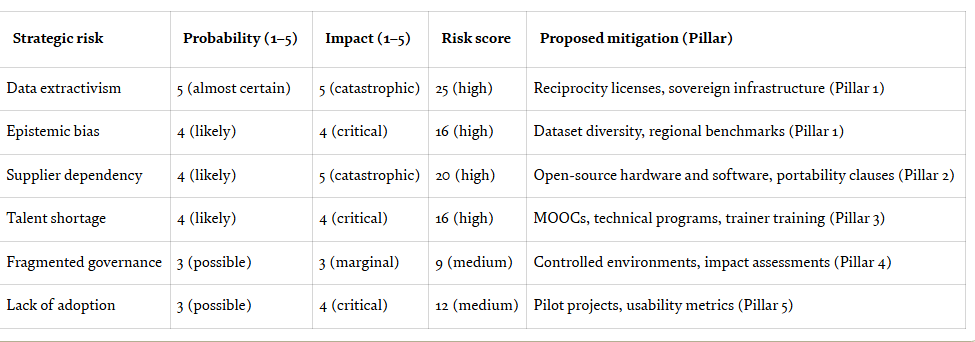
This article explores brain–computer interfaces (BCIs) from the perspective of the Global South, proposing their transformation into emancipatory tools for inclusion, care, and autonomy. It argues that the social value of BCIs depends on anchoring innovation in three key vectors: cognitive sovereignty, which extends data rights to the neural realm with principles of reciprocity and traceability; epistemic justice, which corrects biases in datasets from the Global North to improve generalization in diverse contexts; and situated design, adapting technologies to local realities. On the technical front, it highlights advances such as robust and explainable decoders, online adaptation to reduce calibration, diffusion-based noise removal, and comfortable electrodes for pediatric inclusion, with emphasis on noninvasive electroencephalogram (EEG) in Latin America. It addresses risks like geotechnological asymmetries, data privatization, and neuro-privacy violations, proposing a five-pillar strategy: research with reciprocal licenses, local open-source design, ethical training, regulation via sandboxes, and pilot projects with social impact. Finally, it presents a 2025–2030 roadmap to transition from lab prototypes to sustainable systems, prioritizing metrics of efficacy, safety, and equity under democratic governance, positioning the Global South as a leader in neuro-rights and cognitive dignity.
Información
Autor(es)
Clara Elisa Tapia Nin
José Wilson Gómez Cumpa
Colaboradores
2
Fuente de publicación
IntechOpen
ISSN / ISBN
1013185